
Boat & Crucible
Boat & Crucible
Boat & Crucible
Tungsten and molybdenum boats and crucibles for vacuum deposition and high-temperature melting. They are used where the vessel must not react with molten metal, and are built to your required shape and capacity.
Tungsten and molybdenum boats and crucibles for vacuum deposition and high-temperature melting. They are used where the vessel must not react with molten metal, and are built to your required shape and capacity.
Tungsten and molybdenum boats and crucibles for vacuum deposition and high-temperature melting. They are used where the vessel must not react with molten metal, and are built to your required shape and capacity.
Applied parts
Applied parts
Used as the evaporation source in vacuum coaters, the melting crucible in high-temperature furnaces and the vessel in crystal growth equipment. Material and shape are designed around what it will hold and at what temperature.
Used as the evaporation source in vacuum coaters, the melting crucible in high-temperature furnaces and the vessel in crystal growth equipment. Material and shape are designed around what it will hold and at what temperature.
Capacity, thickness and terminal geometry are set by the drawing and the service conditions. Tell us the dimensions and we will confirm and reply.
Capacity, thickness and terminal geometry are set by the drawing and the service conditions. Tell us the dimensions and we will confirm and reply.
KEY FEATURES
The material decides the yield
It must not melt or react before the metal it holds.

Mouth width, depth and thickness are set to the amount of material to be held and the mounting specification.
High melting point · low vapor pressure
High Melting Point
Tungsten 3,422 °C, molybdenum 2,623 °C. They hold their shape at temperatures far above the metal they hold, and their vapor pressure stays low even in high vacuum, so they do not contaminate the deposited film.
Low reactivity with molten metal
Low Reactivity
They do not react readily with the metals being evaporated, such as aluminum, silver and copper. The vessel neither dissolves into them nor leaves impurities, so its shape changes little through repeated use.
Geometry and capacity designed to drawing
Made to Drawing
Capacity, thickness and cross-section are recalculated to the material to be held and the temperature conditions. Dimensions are met by precision machining after forming.
Melting points by material
Melting point °C. The higher the figure, the higher the temperature at which the geometry holds.
Why this connects to yield
If the vessel reacts with the melt, the whole crystal is scrapped. In single-crystal growth and precision deposition, material stability is the yield.
Repeated thermal cycling
Little deformation through repeated heating and cooling is what extends the replacement interval. Forming history and thickness distribution are controlled to hold the shape.
KEY FEATURES
The material decides the yield
It must not melt or react before the metal it holds.
Melting points by material
Melting point °C. The higher the figure, the higher the temperature at which the geometry holds.
Mouth width, depth and thickness are set to the amount of material to be held and the mounting specification.
Tungsten 3,422 °C, molybdenum 2,623 °C. They hold their shape at temperatures far above the metal they hold, and their vapor pressure stays low even in high vacuum, so they do not contaminate the deposited film.
Mouth width, depth and thickness are set to the amount of material to be held and the mounting specification.
High melting point · low vapor pressure
High Melting Point
Tungsten 3,422 °C, molybdenum 2,623 °C. They hold their shape at temperatures far above the metal they hold, and their vapor pressure stays low even in high vacuum, so they do not contaminate the deposited film.
Low reactivity with molten metal
Low Reactivity
They do not react readily with the metals being evaporated, such as aluminum, silver and copper. The vessel neither dissolves into them nor leaves impurities, so its shape changes little through repeated use.
Geometry and capacity designed to drawing
Made to Drawing
Capacity, thickness and cross-section are recalculated to the material to be held and the temperature conditions. Dimensions are met by precision machining after forming.
Melting points by material
Melting point °C. The higher the figure, the higher the temperature at which the geometry holds.
Why this connects to yield
If the vessel reacts with the melt, the whole crystal is scrapped. In single-crystal growth and precision deposition, material stability is the yield.
Repeated thermal cycling
Little deformation through repeated heating and cooling is what extends the replacement interval. Forming history and thickness distribution are controlled to hold the shape.
DESIGN PRECISION
Designed to the material it will hold
In boats and crucibles, capacity and wall thickness rather than geometry decide performance.
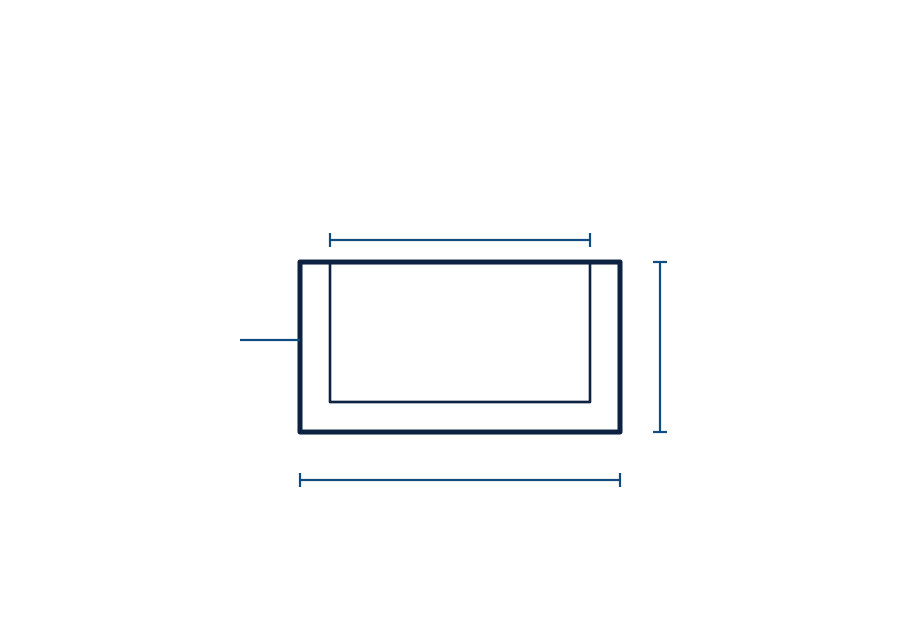
Even in the same crucible, changing the wall thickness and bore changes the capacity and the heating rate. The same geometry name does not mean the same product.
Thickness design
The wall thickness of a crucible or boat is directly its resistance and heating rate. Thickness and cross-section are set to the supply power.
Capacity to order
Width, length and depth are set to the amount of material to be held and the mounting specification.
Material selection
We choose between tungsten and molybdenum based on the evaporation temperature and reactivity.
Tell us the material to be held and the mounting specification, and we will propose the most suitable capacity and wall thickness.
DESIGN PRECISION
Designed to the material it will hold
In boats and crucibles, capacity and wall thickness rather than geometry decide performance.
Even in the same crucible, changing the wall thickness and bore changes the capacity and the heating rate. The same geometry name does not mean the same product.
Thickness design
The wall thickness of a crucible or boat is directly its resistance and heating rate. Thickness and cross-section are set to the supply power.
Capacity to order
Width, length and depth are set to the amount of material to be held and the mounting specification.
Material selection
We choose between tungsten and molybdenum based on the evaporation temperature and reactivity.
Tell us the material to be held and the mounting specification, and we will propose the most suitable capacity and wall thickness.
APPLICATIONS
Applications
The high-temperature, vacuum processes where boats and crucibles are used.
APPLICATIONS
Applications
The high-temperature, vacuum processes where boats and crucibles are used.
LEAD TIME
Fabrication and Lead Time
Here is the process for supplying boats and crucibles made to your drawing and specification.
STEP 01
Drawing received
Send us the material to be held, the capacity, the mounting specification and the thickness. If you have no drawing, the service conditions alone are enough to start.
Reply within 1 daySTEP 02
Specification review
We review the geometry, capacity and tab specification and propose the material and thickness. Where useful we propose geometry changes as well.
2 – 4 daysSTEP 03
Forming · machining
Formed to the required geometry, with tabs and steps machined to the dimensions on the drawing.
By agreement, depending on the production scheduleSTEP 04
Inspection · delivery
Thickness, capacity and surface condition are measured, and the part ships with a test report. Repeat orders to the same drawing skip the review stage.
By agreement, depending on the production scheduleMinimum quantity
From small quantities
Varies with geometry and dimensions. Custom work is possible in small quantities.
Standard lead time
About 2 – 3 weeks
From drawing approval. Complex geometries or special machining add process stages.
Supplied with it
Test report
A report with thickness and capacity measurements is sent with the delivery.
LEAD TIME
Fabrication and Lead Time
Here is the process for supplying boats and crucibles made to your drawing and specification.
Drawing received
Send us the material to be held, the capacity, the mounting specification and the thickness. If you have no drawing, the service conditions alone are enough to start.
From small quantities
Varies with geometry and dimensions. Custom work is possible in small quantities.
About 2 – 3 weeks
From drawing approval. Complex geometries or special machining add process stages.
Test report
A report with thickness and capacity measurements is sent with the delivery.
STEP 01
Drawing received
Send us the material to be held, the capacity, the mounting specification and the thickness. If you have no drawing, the service conditions alone are enough to start.
Reply within 1 daySTEP 02
Specification review
We review the geometry, capacity and tab specification and propose the material and thickness. Where useful we propose geometry changes as well.
2 – 4 daysSTEP 03
Forming · machining
Formed to the required geometry, with tabs and steps machined to the dimensions on the drawing.
By agreement, depending on the production scheduleSTEP 04
Inspection · delivery
Thickness, capacity and surface condition are measured, and the part ships with a test report. Repeat orders to the same drawing skip the review stage.
By agreement, depending on the production scheduleMinimum quantity
From small quantities
Varies with geometry and dimensions. Custom work is possible in small quantities.
Standard lead time
About 2 – 3 weeks
From drawing approval. Complex geometries or special machining add process stages.
Supplied with it
Test report
A report with thickness and capacity measurements is sent with the delivery.
HANDLING
Handling precautions
These apply to refractory metals in general. Service life depends heavily on how the parts are handled.
01
01
Do not touch the parts with bare hands after unpacking. Oil from fingerprints carbonizes at high temperature and becomes a contaminant.
02
02
The material is weak against impact and bending. Tungsten is brittle at room temperature and can crack if dropped.
03
03
Do not heat above 500°C in air; oxidation accelerates sharply. Always use the parts in a vacuum or an inert atmosphere.
04
04
Avoid rapid heating and cooling. On first use, we recommend pre-heating (aging) at low current.
05
05
Store indoors in a dry place and keep the moisture-barrier packaging intact.
If your installation or operating conditions are unusual, our engineers will review them in advance. Send a drawing or your process conditions and we will start by selecting the right material with you.
If your installation or operating conditions are unusual, our engineers will review them in advance. Send a drawing or your process conditions and we will start by selecting the right material with you.
If your installation or operating conditions are unusual, our engineers will review them in advance. Send a drawing or your process conditions and we will start by selecting the right material with you.

Advanced material supply and machining,
a global material leader
From raw material to finished part, the best solution seen from your side.
Weekdays 9:00 AM – 5:30 PM (alternate Fridays until 4:00 PM; closed weekends and public holidays)
Advanced material supply and machining,
a global material leader
From raw material to finished part, the best solution seen from your side.
Weekdays 9:00 AM – 5:30 PM (alternate Fridays until 4:00 PM; closed weekends and public holidays)

KOREA TUNGSTEN CO.,LTD
KOREA TUNGSTEN CO.,LTD
Refractory metal supply and ultra-precision machining — core materials for semiconductor, display, defense, space, medical & radiation.
INNOMT LLC
INNOMT CO.,LTD
Korea Tungsten's official overseas division
Key industries served
Customer support
© 2026 Korea Tungsten Co., Ltd. All rights reserved. 83 Bideukbawi-gil, Jori-eup, Paju-si, Gyeonggi-do 10949, Korea (364-2 Osan-ri) +82-31-975-1717
© 2026 INNOMT Co., Ltd. All rights reserved. Unit A-1710, IS Biz Tower Hangang 3, 50 Eutteum-ro, Deogyang-gu, Goyang-si, Gyeonggi-do 10543, Korea +82-2-6408-4239
Privacy Policy
Terms of Use
Cookie settings
KOREA TUNGSTEN CO.,LTD
KOREA TUNGSTEN CO.,LTD
Refractory metal supply and ultra-precision machining — core materials for semiconductor, display, defense, space, medical & radiation.
INNOMT LLC
INNOMT CO.,LTD
Korea Tungsten's official overseas division
Key industries served
Customer support
© 2026 Korea Tungsten Co., Ltd. All rights reserved. 83 Bideukbawi-gil, Jori-eup, Paju-si, Gyeonggi-do 10949, Korea (364-2 Osan-ri) +82-31-975-1717
© 2026 INNOMT Co., Ltd. All rights reserved. Unit A-1710, IS Biz Tower Hangang 3, 50 Eutteum-ro, Deogyang-gu, Goyang-si, Gyeonggi-do 10543, Korea +82-2-6408-4239
Privacy Policy
Terms of Use
Cookie settings